
The rupee depreciation will work in favour of students who are currently studying in the US and plan to secure a job that pays in dollars.
Demonetisation was not a good idea and the time should have been utilised instead to fine-tune the Goods and Services Tax before it was introduced, said Gita Gopinath, John Zwaanstra Professor of International Studies and of Economics at Harvard University, in an interview with Advait Rao Palepu.

Passengers can book the combined plane-train journey as a single ticket.

Petroleum Minister Murli Deora has asked Prime Minister Manmohan Singh for a Re 1 per litre excise duty cut on crude oil to enable a reduction in auto fuel prices, necessary to contain the growing inflation.
The rise in petro-product prices have been necessitated by rising global costs of petroleum and the fact that the price of petrol and diesel has not been increased in India since January 2004.
'Primary buyers are commercial taxi and fleet operators and small businessmen.' 'CNG prices have been remarkably stable unlike petrol.'
The kingdom, the world's leading oil producer, also offered to coordinate with the Organisation of Petroleum Exporting Countries and other major producers to ensure adequate fuel supply in order to curb prices. Pressure is being mounted on OPEC, the supplier of more than a third of the world's oil, to boost output in order to ease the effect of high prices on economies across the world.
The Left-leaning trade union CITU on Tuesday condemned the high-powered B K Chaturvedi Committee's call for raising fuel prices every month till they are in line with costs saying the panels' report should be outrightly rejected.
Civil Minister Praful Patel on Monday ruled out retrenchment among employees in public sector Air India and blamed rising fuel prices as the reason behind the present crisis in the aviation sector.
When oil prices collapse from $110 to $45, economic agents in India experience a large income windfall.
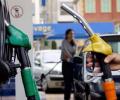
In the first reduction in rates in over a year, petrol price on Wednesday was cut by 18 paise per litre and diesel by 17 paise a litre as international oil prices tumbled to the lowest since early February.

Major Indian carmakers are preparing for sluggish domestic PV sales growth of just 1-2 per cent in FY26.

The wide-ranging sanctions imposed by the US on the Russian oil sector have started to dent near-term oil flows to India with state-owned Bharat Petroleum Corporation Ltd (BPCL) saying not enough cargoes are available for March.
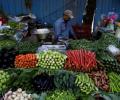
Wholesale price inflation remained in the negative territory for the fourth month in a row in July at (-)1.36 per cent, even though prices of food items, especially vegetables, skyrocketed. The inflation, however, has inched up from (-)4.12 per cent recorded in June fuelled by 62.12 per cent rise in vegetable prices. In July last year, wholesale price index (WPI) was 14.07 per cent.
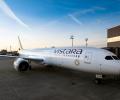
'I don't think there will be a direct reaction to the fuel price hike on air ticket prices.'
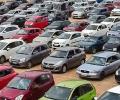
Passenger and commercial vehicle prices are expected to rise as automobile companies invest in upgrading vehicles to meet stricter emission norms that kick in from April next year. The Indian automobile industry is currently working to make their products meet the second phase of Bharat Stage VI, equivalent to Euro-VI emission norms, in real time driving conditions. Four-wheeler passenger and commercial vehicles will need more sophisticated equipment to be added to meet the next level of emission standards.

Decrying the hike in diesel prices as "unjustified" action, Tamil Nadu Chief Minister J Jayalalithaa on Tuesday demanded its roll back and withdrawal of powers granted to oil companies to regulate fuel prices.
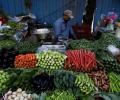
Wholesale inflation fell to a 4-month low of 1.31 per cent in August due to a decline in prices of vegetables and fuel, even though onion and potato prices spiked, according to official data released on Tuesday. Wholesale price index-based inflation fell for the second straight month in August after it hit a high of 3.43 per cent in May. Inflation in July was 2.04 per cent. In August last year, WPI inflation was (-) 0.46 per cent.
Even as growth in traffic on chartered flights has fallen 6 to 8 per cent over the past year, rising fuel prices are forcing private charter operators to raise tariffs a substantial 20 per cent from September 1. India has more than 50 non-scheduled operators, which include helicopter operators like Global Vectra, aircraft operators like Ran Air and Taj Air and companies like Deccan Aviation Ltd that fly both helicopters and aircraft.
Expressing concerns over rising prices of essential commodities globally, Finance Minister P Chidambaram on Friday favoured adjustments in domestic policies to contain inflation. Pointing to global oil prices touching new highs, the finance minister said: "It is important to factor in price increase and adjust our policies so that inflation doesn't get out of hand."

Inflation in food articles during June stood at 2.04 per cent, as against 1.13 per cent in May.

The company attributed the hike to depreciating rupee and rising input costs.
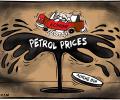
Petrol price on Wednesday crossed the Rs 100-a-litre mark after fuel prices were increased in line with firming international oil trends. Petrol price was increased by 35 paise per litre and diesel by 23 paise a litre, according to a price notification of state-owned fuel retailers. In Delhi, petrol now costs Rs 100.21 a litre and diesel is priced at Rs 89.53 per litre.

Petrol and diesel price on Sunday was hiked again by 35 paise a litre and the auto fuels now cost a third more than the rate at which ATF is sold to airlines. The fourth straight day of 35 paise per litre hike sent petrol and diesel rates to record highs across the country. The price of petrol in Delhi rose to its highest-ever level of Rs 105.84 a litre and Rs 111.77 per litre in Mumbai, according to a price notification of state-owned fuel retailers.
The rise in inflation was mainly on account of higher milk, edible oil, vegetable and fruit prices.
As common people grope for means to counter the ever-increasing prices of essential commodities, the economists and financial analysts fear that the recent hike in fuel prices would soon push inflation past 9 per cent. In an interview to rediff.com's special correspondent A Ganesh Nadar, Economic advisor to the Tata group Siddhartha Roy, shared his thoughts on the vexing issue of India's inflation.
With consensus on raising petrol, diesel and domestic LPG prices still eluding, the Cabinet Committee on Political Affairs will meet early Wednesday morning. If a consensus is hammered at the CCPA meeting, the Cabinet Committee on Economic Affairs may be convened, government sources said.
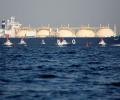
Tightening Russian gas supplies to Europe has led to scramble for tankers before winter sets in.

The last time this happened was in 1996.

The activist Birinchi Bora drove into the venue of the street play dramatically in a motorcycle with another actor dressed as Goddess Parvati for their play on Saturday which had several Hindutva outfits up in arms demanding their arrest.

Its revenue during the period grew by 65 per cent to touch Rs 9,458 crore (Rs 94.58 billion), as against Rs 5,718 crore (Rs 57.18 billion) during FY12.
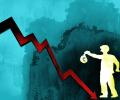
Corporate margins and profits in India remain vulnerable to changes in crude oil prices in the international market. Historical quarterly data from listed companies (excluding banks, finance and insurance, oil and gas, and power sectors) indicate an adverse correlation between corporate margins and crude oil prices.

The government in FY26 Budget should announce an "effective" personal income tax cut to support consumption and demand, Barclays said on Thursday. In its FY25-26 Union Budget preview, Barclays said the key ask from the Budget, to be presented on February 1, is to support growth while adhering to fiscal consolidation path.
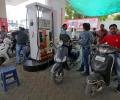
More than a week after state-owned oil firms ended a 19-day pre-Karnataka poll hiatus on revising fuel prices, petrol and diesel rates have touched record highs.
The ministry, however, clarified that there was no change in the prices of kerosene and LPG.
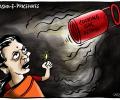
Uttam Ghosh offers his take on the rise in the price of fuel and cooking gas
Expressing concern over the impact of rising crude oil prices on Indian economy, Prime Minister Manmohan Singh on Monday said it can have adverse consequences for the economy. "We cannot allow the subsidy bill to rise any further," Singh said and appealed to all the political parties to adopt a wider consensus on the pricing issue.
